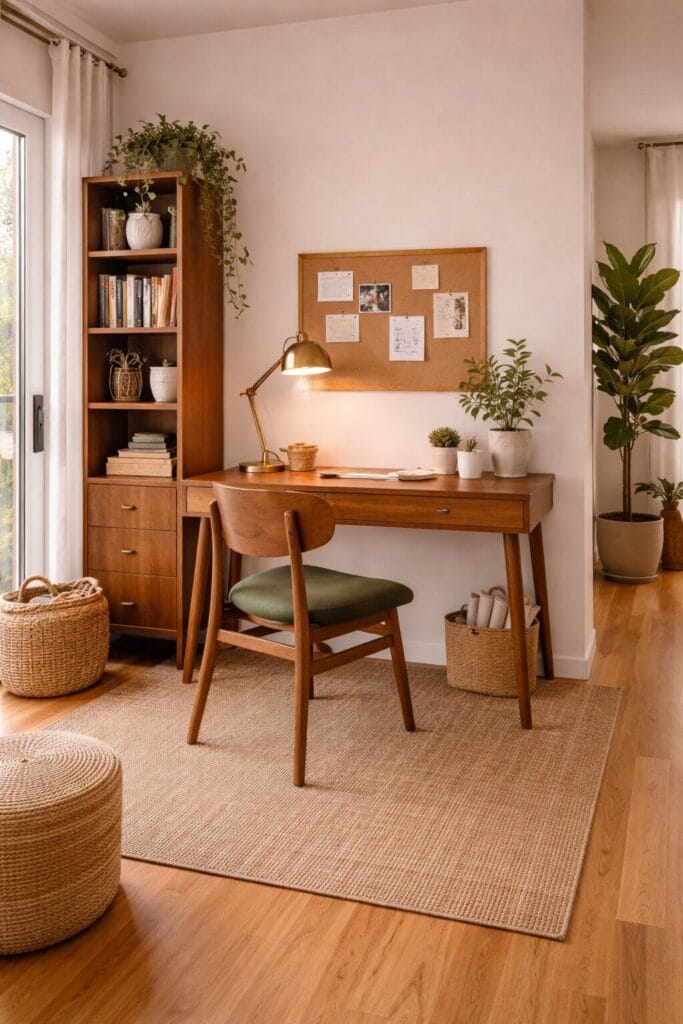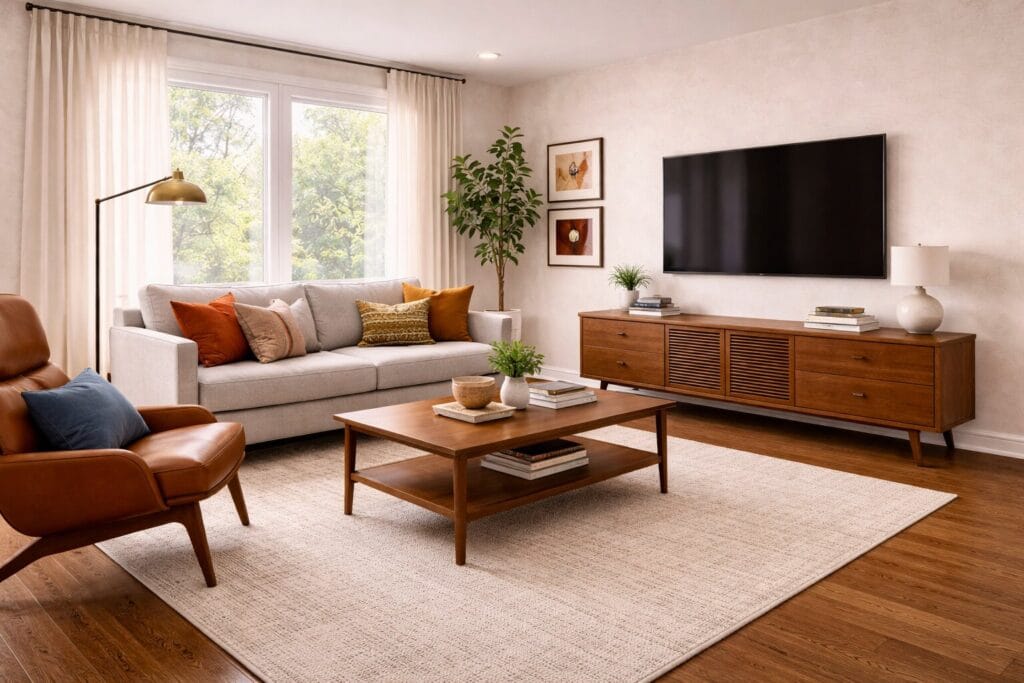
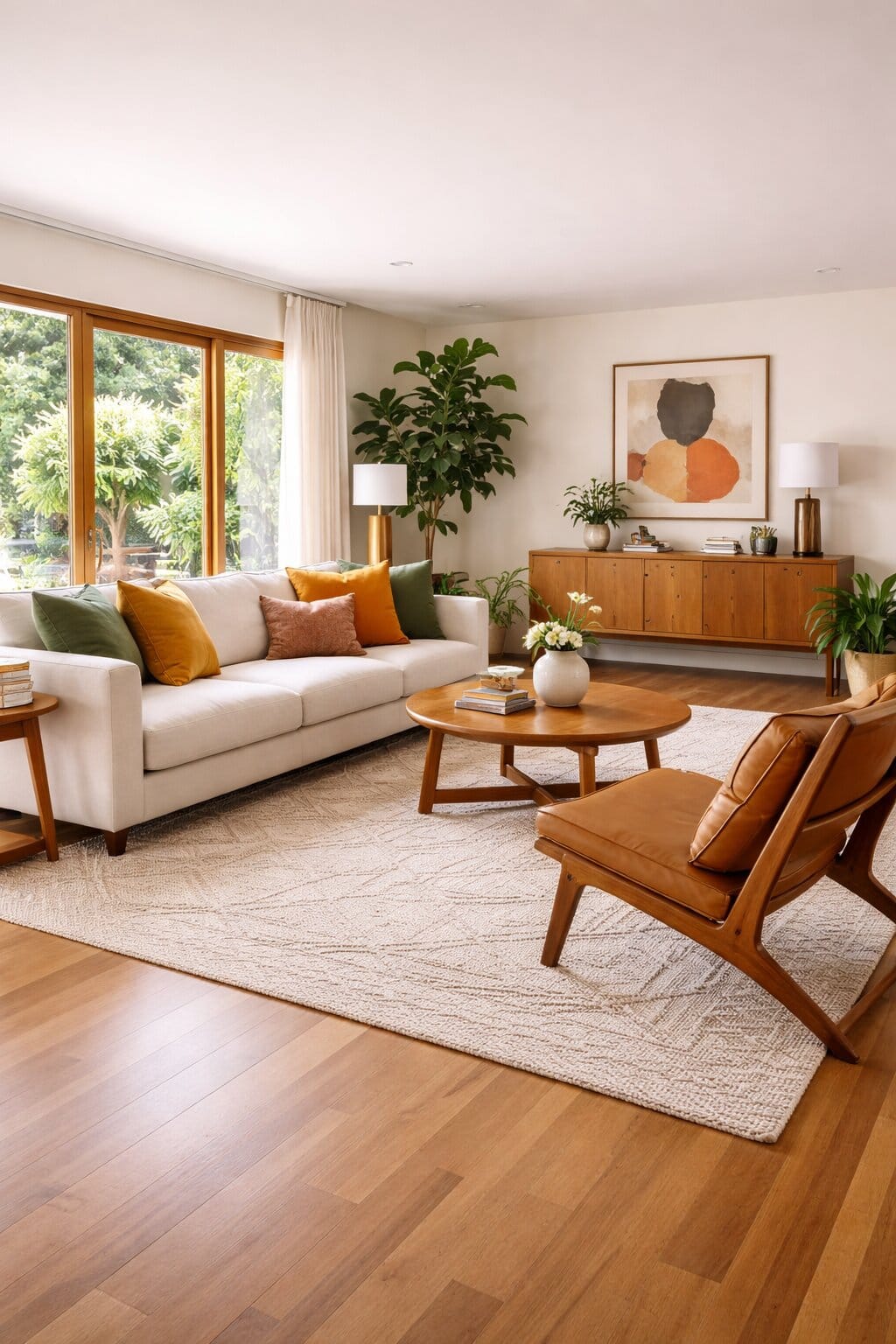
Mid-century modern interior design is a design style that emerged in the mid-20th century, roughly between the 1940s and 1970s. Known for its clean lines, functional layouts, and emphasis on natural materials, it continues to influence contemporary interiors today.
At its core, mid-century modern design is about creating spaces that are both practical and visually balanced, where form and function work together seamlessly.
The Core Principles
Mid-century modern interiors are defined by a few key ideas:
Function First
Every element serves a purpose. Furniture, layouts, and details are designed with usability in mind, avoiding unnecessary decoration.
Simplicity & Clarity
Spaces are clean and uncluttered, with a focus on strong shapes and clear compositions rather than ornate detailing.
Connection to Nature
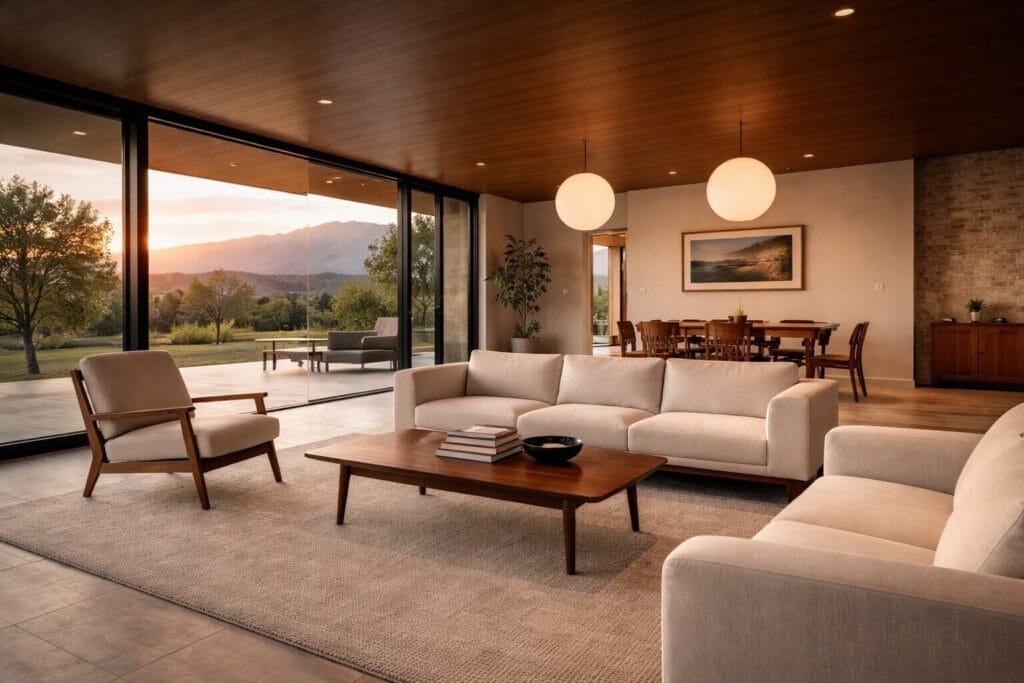
Large windows, open spaces, and natural materials create a strong relationship between interior and exterior environments.
Timeless Design
Rather than following trends, mid-century modern interiors rely on proportions, materials, and balance—making them feel relevant across decades.
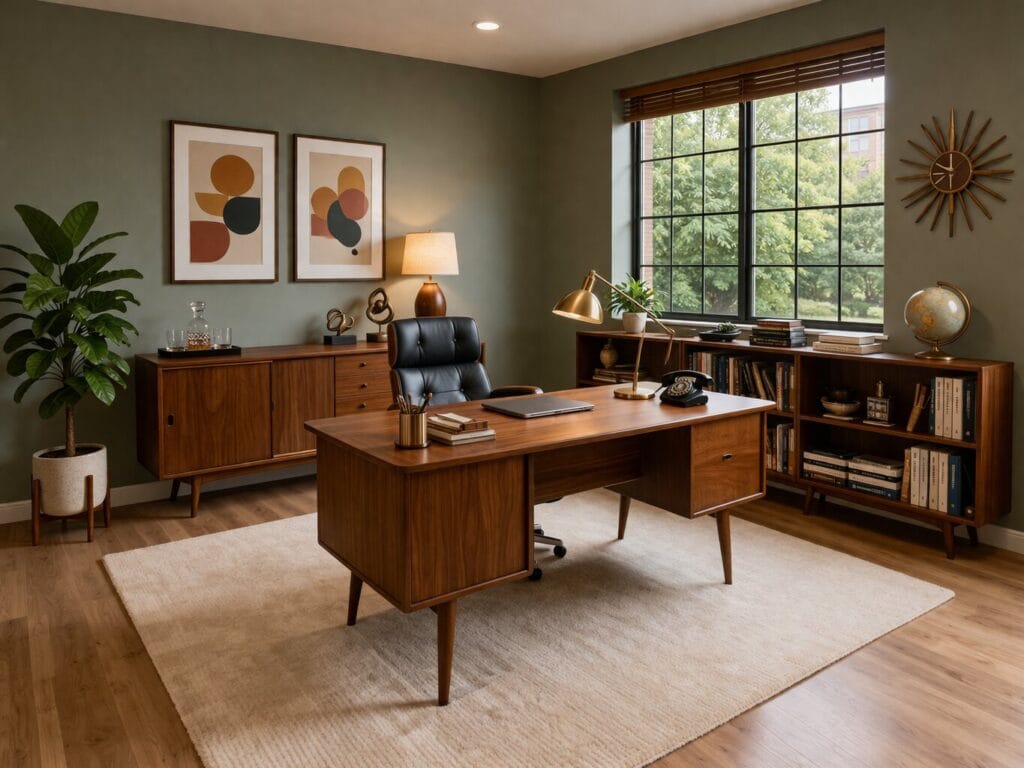
Key Design Elements
Clean Lines
Furniture and architecture feature simple, straight or gently curved lines without excessive ornamentation.
Organic Forms
Shapes inspired by nature soften the overall composition, creating balance within the space.
Minimal Ornamentation
Decoration is intentional and restrained, allowing materials and forms to stand out.
Color & Materials
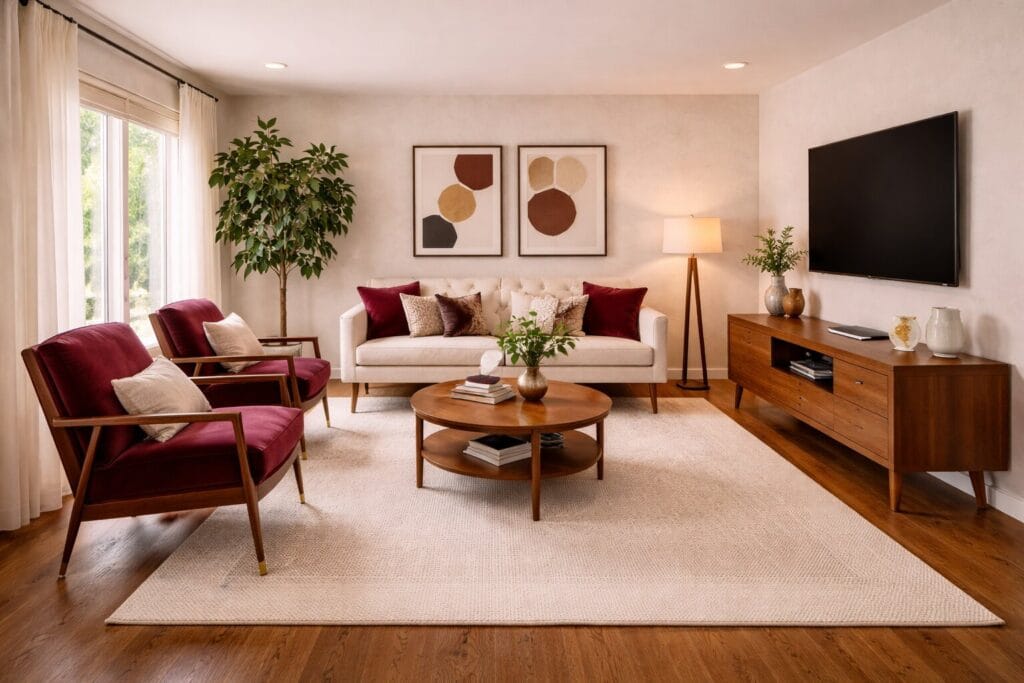
Mid-century modern interiors often combine neutral bases with richer accent tones.
Color Palette
- Warm neutrals (beige, cream, soft gray)
- Earth tones (olive green, rust, mustard)
- Occasional bold accents
Materials
- Natural wood (often walnut or teak)
- Leather and textured fabrics
- Stone, ceramic, and glass
These materials add warmth and depth while maintaining a clean and cohesive look.
Layout & Space
Open layouts are a defining feature of mid-century modern design. Spaces are often connected, allowing for better flow and natural light distribution.
Furniture is arranged to support movement and interaction, rather than simply filling the room.
Why It Still Works Today
Mid-century modern design remains popular because it balances aesthetics with practicality. Its focus on simplicity, functionality, and natural materials makes it adaptable to modern lifestyles.
Rather than feeling tied to a specific era, it offers a flexible framework that can be interpreted in both residential and commercial spaces.
In Practice
At MCM Studio, mid-century modern principles guide every project—from residential interiors to hospitality and workplace design. The goal is always the same: to create spaces that are clear, functional, and visually enduring.
Conclusion
Mid-century modern interior design is more than a style—it is a design approach rooted in clarity, purpose, and timeless appeal. By focusing on function, material, and proportion, it creates interiors that remain relevant, comfortable, and refined.