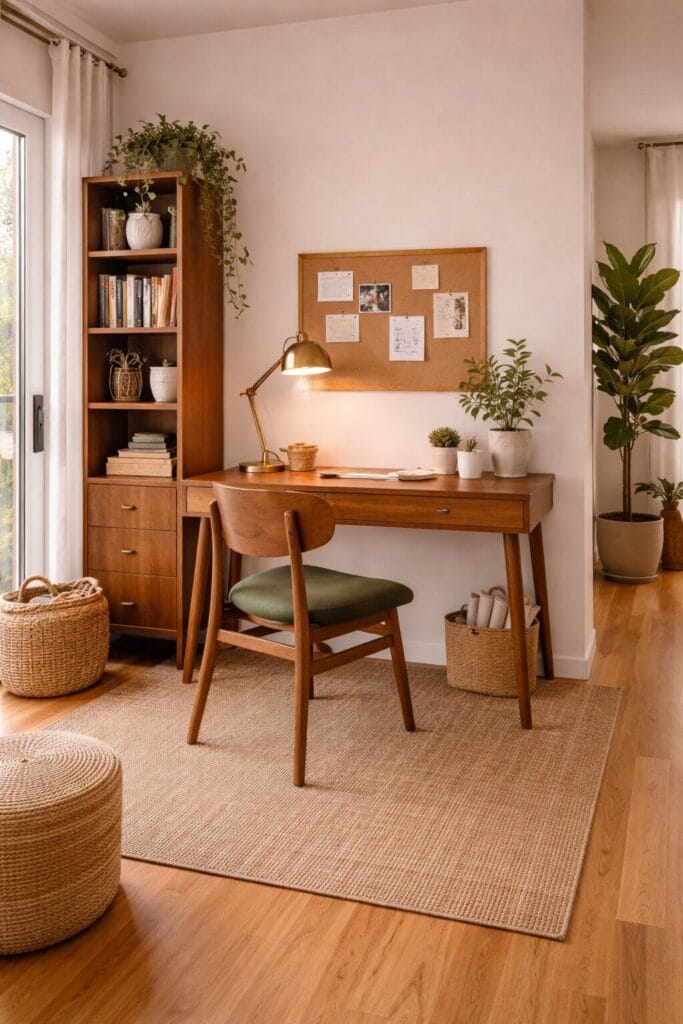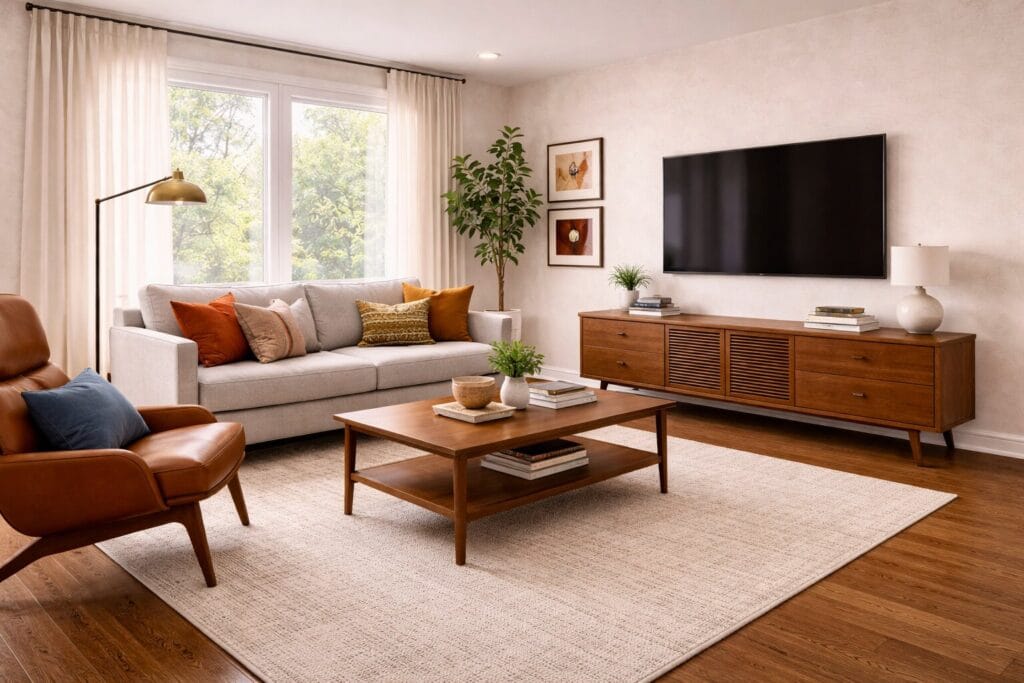
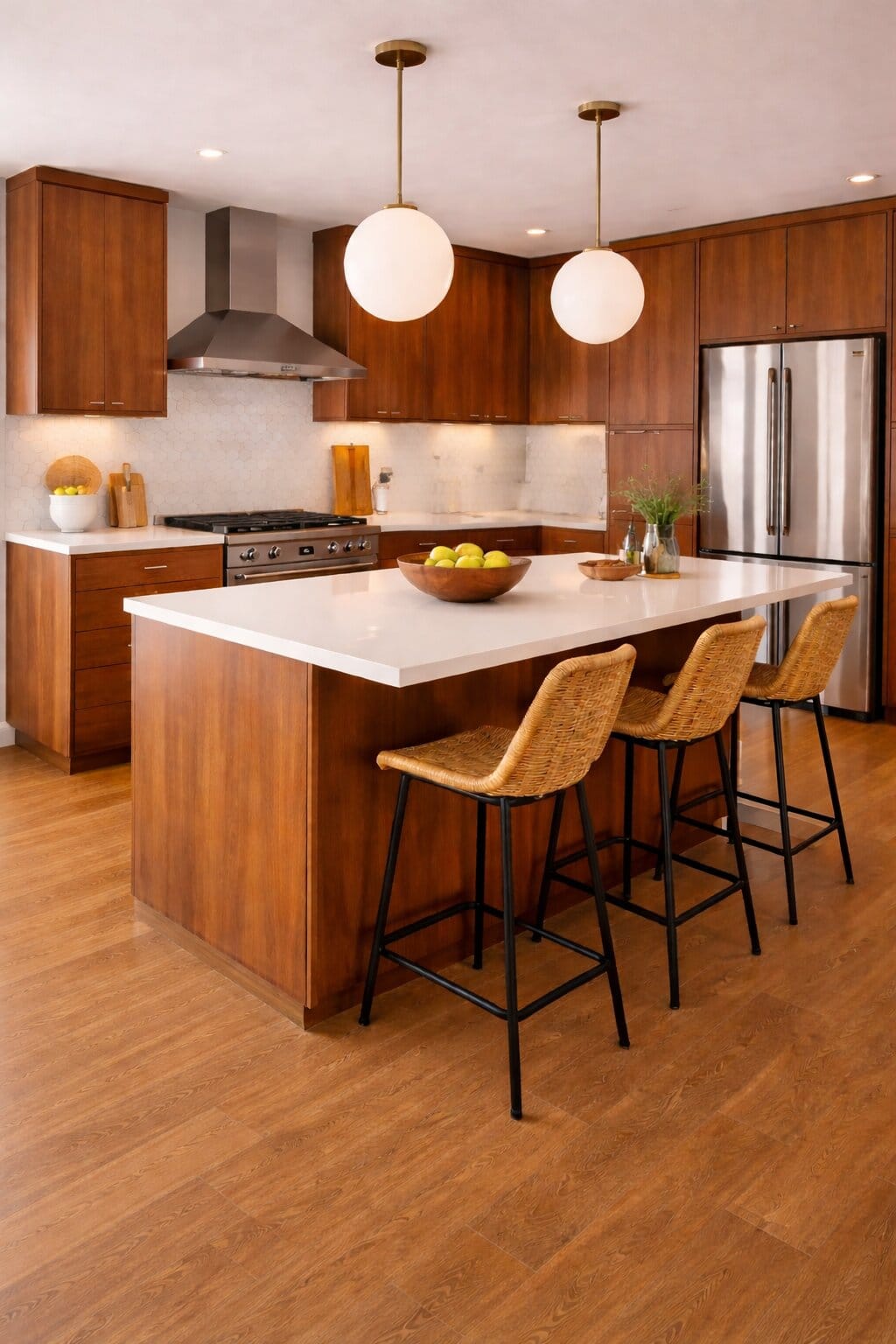
Creating a warm interior is not only about color—it is primarily defined by materials. Texture, tone, and surface quality all contribute to how a space feels, often more than decoration itself.
A well-balanced material palette can make an interior feel inviting, grounded, and timeless.
What Defines “Warmth” in Interior Design?
Warm interiors are typically characterized by:
- Natural materials
- Soft textures
- Subtle variation in tone
- A balance between light and depth
Rather than relying on bold contrasts, warmth comes from layering materials that feel cohesive and comfortable.
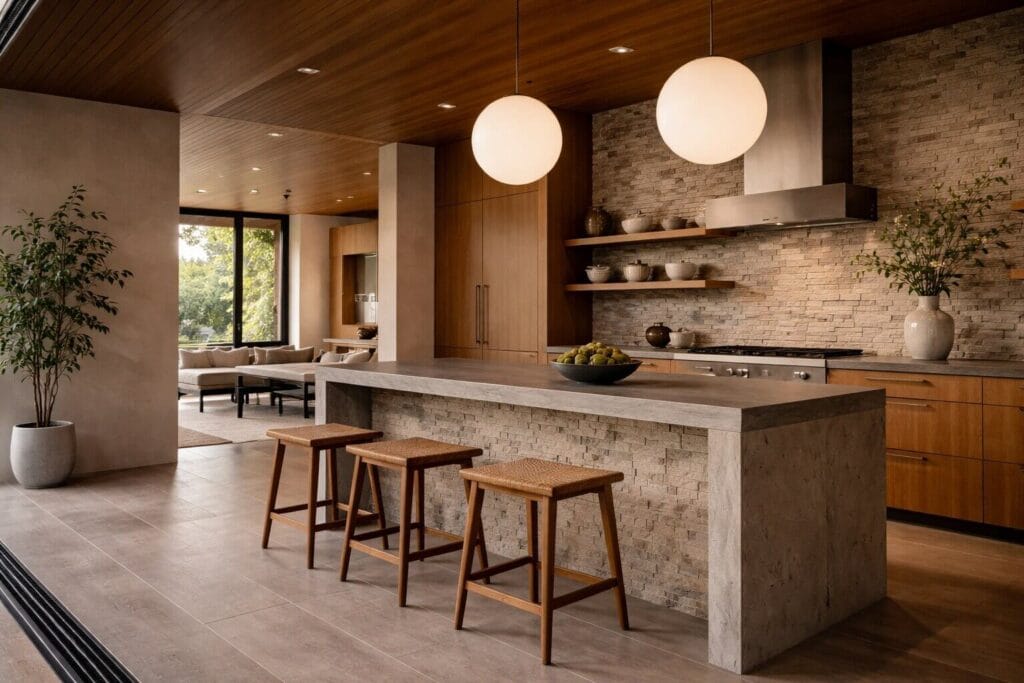
Natural Wood
Wood is one of the most important materials for creating warmth.
- Walnut and oak introduce depth and richness
- Lighter woods create a softer, more open feel
- Visible grain adds texture and authenticity
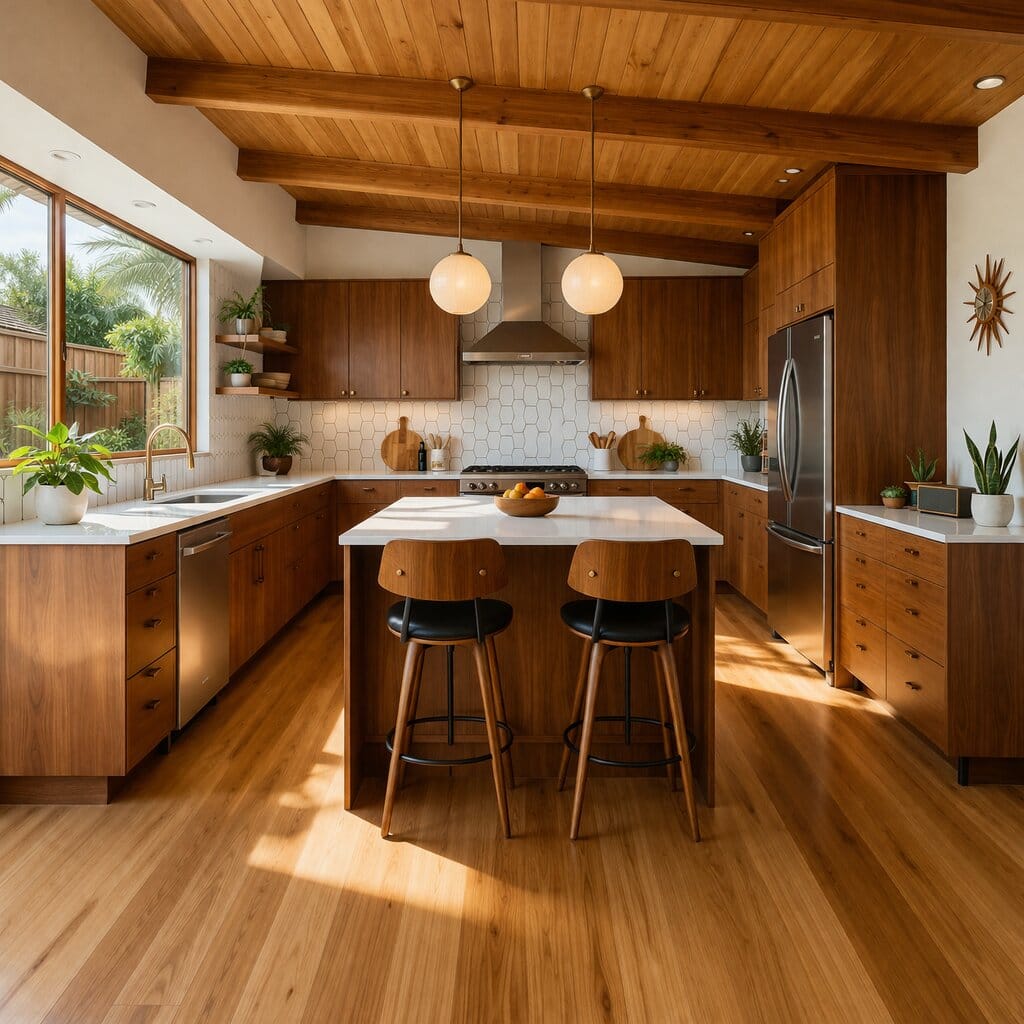
Wood can be used across flooring, furniture, cabinetry, and wall elements to establish a consistent base.
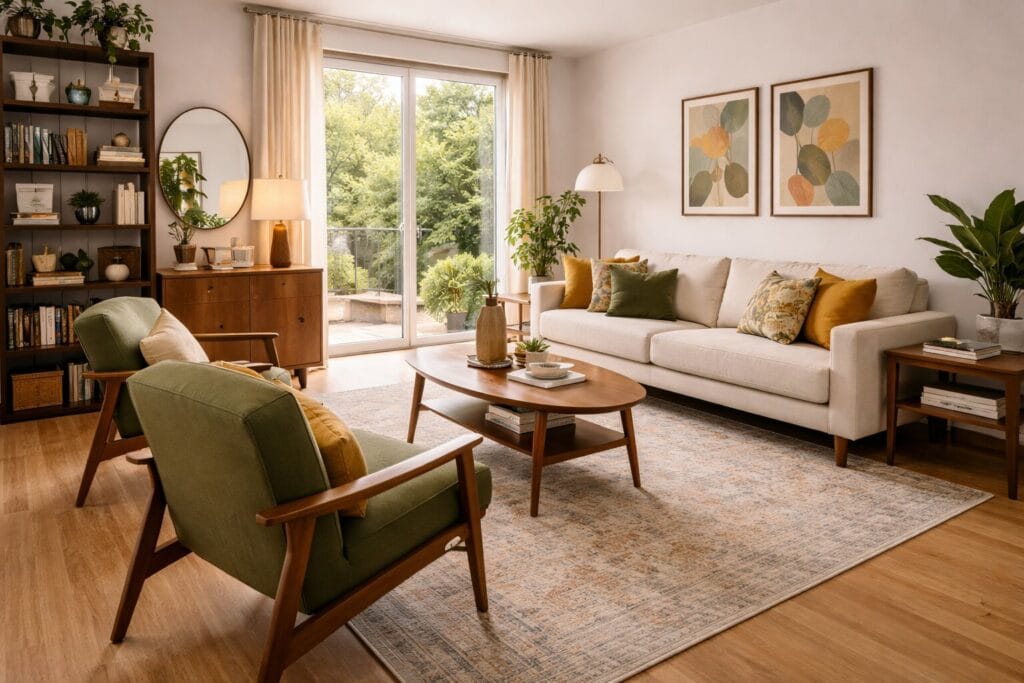
Textiles & Upholstery
Soft materials add comfort and visual softness to a space.
- Linen and cotton create a relaxed, breathable feel
- Wool adds texture and warmth
- Upholstered furniture balances harder surfaces
Layering textiles through rugs, cushions, and curtains helps create a more inviting environment.
Stone & Natural Surfaces
Stone introduces contrast while maintaining a natural aesthetic.
- Marble adds refinement
- Travertine and limestone feel softer and more organic
- Matte finishes are often more suitable than polished ones for a warm look
Used carefully, stone can enhance depth without making a space feel cold.
Ceramics & Tiles
Ceramic materials bring subtle variation and texture.
- Handmade or textured tiles add character
- Earth-toned finishes reinforce warmth
- Glossy surfaces can be balanced with matte materials
They work particularly well in kitchens and bathrooms.
Leather & Natural Fabrics
Leather adds richness and a tactile quality.
- Works well for seating elements
- Ages naturally over time
- Introduces depth without overwhelming the space
Combined with softer textiles, it creates a balanced composition.
Metal Accents (Used Carefully)
Metals should support, not dominate.
- Brass and brushed gold add warmth
- Avoid overly reflective finishes
- Use in small details (handles, lighting, fixtures)
These accents help elevate the overall material palette.
Natural Elements
Bringing natural elements into the space reinforces warmth.
- Indoor plants
- Natural fibers (rattan, jute)
- Organic decorative elements
These add softness and connect the interior to its environment.
Keeping It Cohesive
Warm interiors rely on consistency.
- Limit the number of materials
- Repeat key elements across spaces
- Balance textures rather than competing finishes
A cohesive palette ensures the space feels intentional rather than cluttered.
Common Mistakes to Avoid
- Using too many contrasting materials
- Overusing cold finishes (glass, chrome, high gloss)
- Ignoring texture variation
- Mixing styles without a clear direction
In Practice
At MCM Studio, material selection is central to every project. By combining natural wood, soft textiles, and subtle accents, interiors are designed to feel both comfortable and visually balanced.
Conclusion
Warm interiors are created through thoughtful material choices rather than decoration alone. By focusing on texture, tone, and cohesion, it’s possible to design spaces that feel inviting, timeless, and grounded.