Designing a living room is not just about choosing furniture—it’s about creating a space that supports how you live. A functional layout ensures comfort, flow, and usability, while still maintaining a clear and balanced aesthetic.
Whether the space is large or compact, a well-planned layout can significantly improve how the room feels and performs.
Start With the Purpose
Before arranging furniture, define how the space will be used.
- Is it primarily for relaxing?
- Entertaining guests?
- Watching TV?
- Working or reading?
Most living rooms serve multiple functions, so the layout should reflect that balance.
Define a Focal Point
Every living room needs a visual anchor.
This could be:
- A TV
- A fireplace
- A large window
- A statement wall
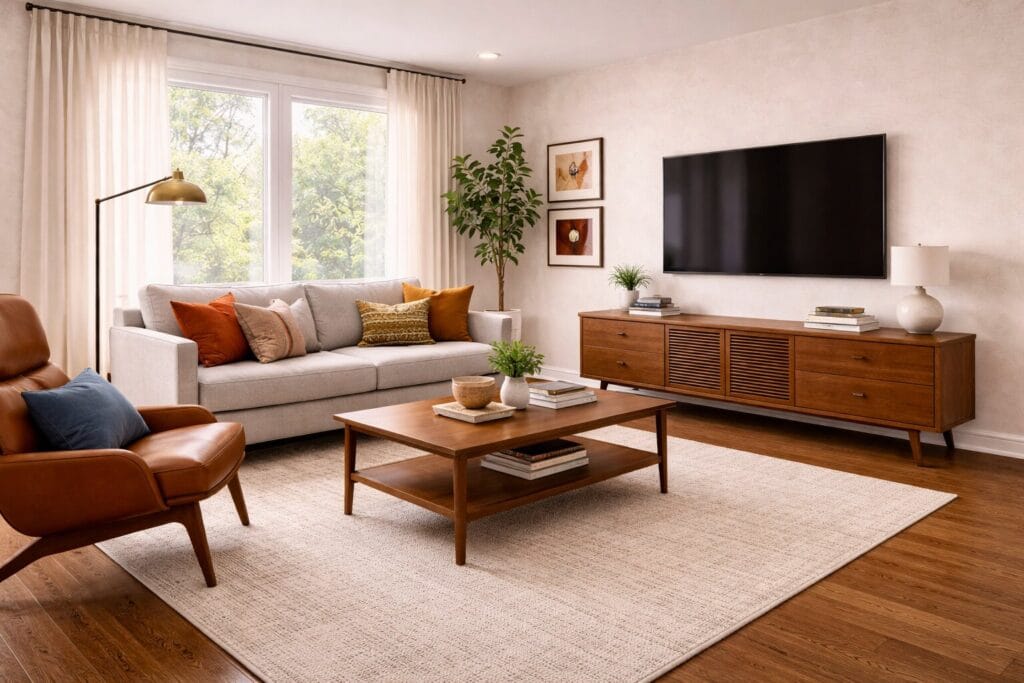
Furniture should be arranged in relation to this focal point, creating a sense of direction and cohesion within the space.
Plan the Layout First
Avoid placing furniture randomly. Start with the main pieces:
- Sofa
- Coffee table
- Accent chairs
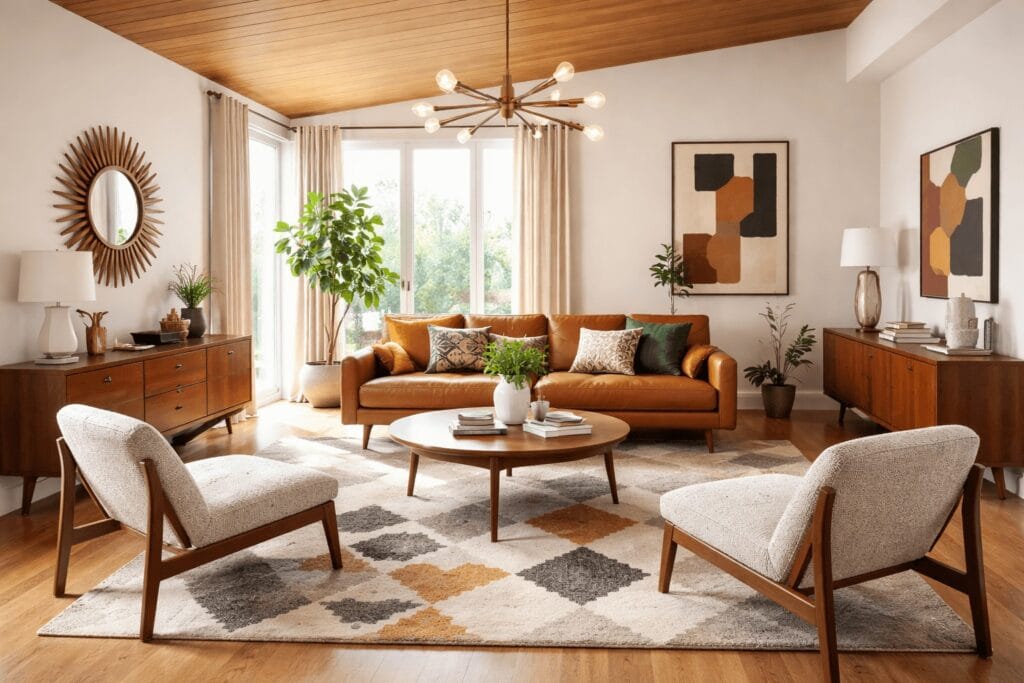
Arrange them to form a clear seating area. Ideally, seating should face each other or be positioned to encourage conversation.
Maintain Clear Circulation
One of the most common mistakes is blocking movement.
Make sure:
- There is enough space to walk comfortably
- Paths between areas are unobstructed
- Furniture doesn’t feel cramped
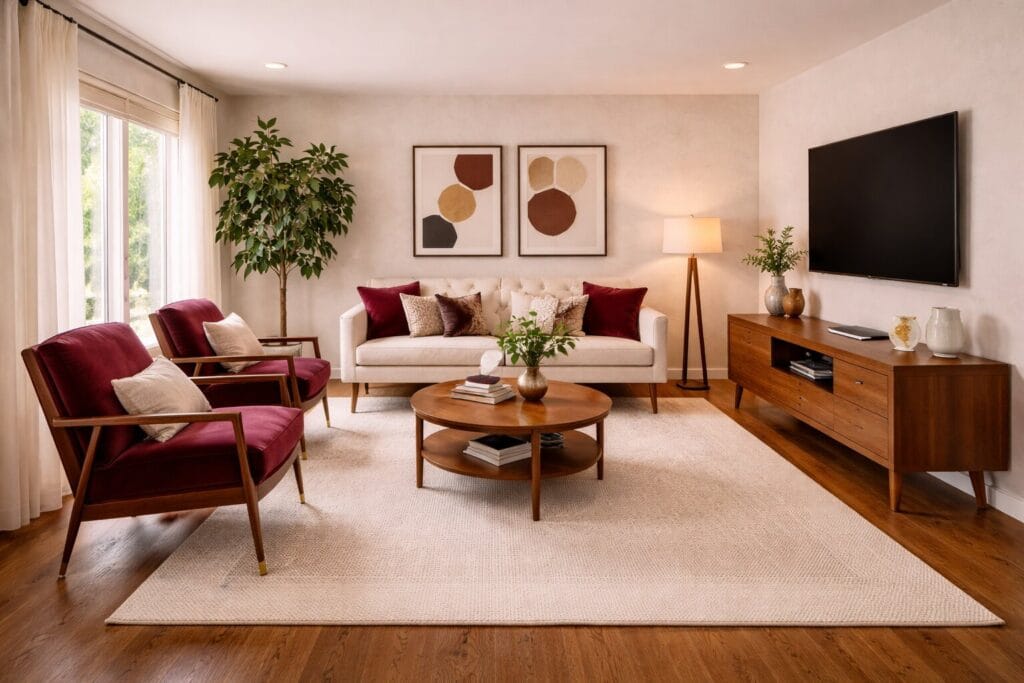
As a general rule, leave at least 60–90 cm (24–36 inches) for main walkways.
Use Proper Proportions
Furniture size should match the scale of the room.
- Large room → larger pieces
- Small room → more compact furniture
Avoid oversized sofas in small spaces or tiny furniture in large rooms, as both disrupt balance.
Create Zones (If Needed)
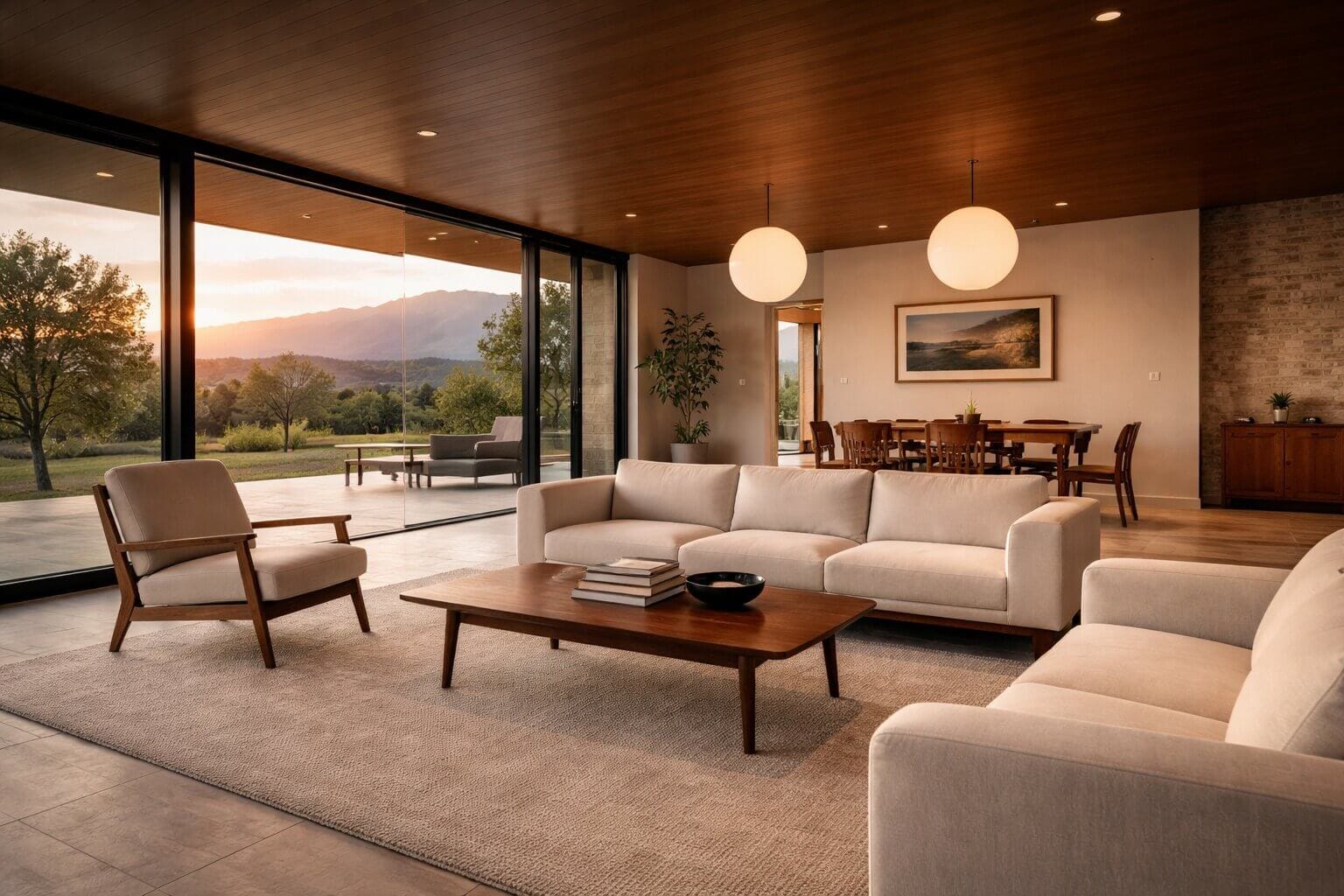
In open-plan spaces, the living room may need to coexist with dining or working areas.
Use:
- Rugs
- Lighting
- Furniture placement
to subtly define different zones without adding walls.
Balance the Space
A good layout feels visually stable.
- Distribute furniture evenly
- Avoid placing everything against one wall
- Mix different heights and shapes
This creates a more natural and comfortable environment.
Consider Lighting
Lighting plays a key role in functionality.
Combine:
- Ambient lighting (overall illumination)
- Task lighting (reading lamps)
- Accent lighting (atmosphere)
This allows the space to adapt to different uses throughout the day.
Add Layers Thoughtfully
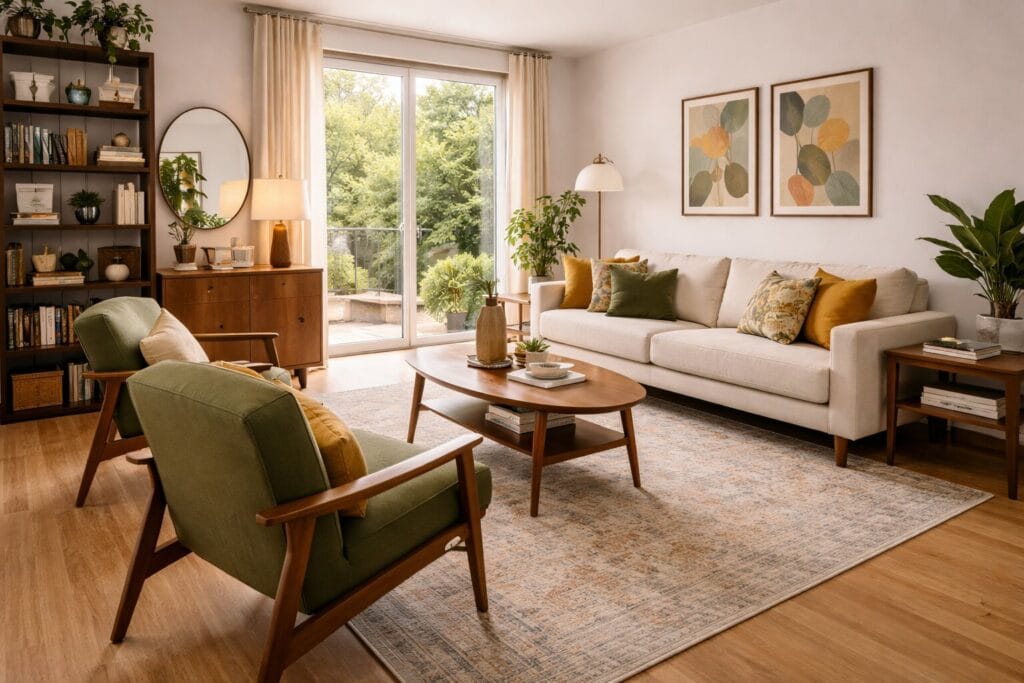
Once the layout is set, introduce:
- Rugs
- Textiles
- Plants
- Decorative elements
These should enhance the space, not overcrowd it.
Common Mistakes to Avoid
- Placing all furniture against the walls
- Ignoring circulation paths
- Choosing incorrect furniture sizes
- Overfilling the room with unnecessary pieces
In Practice
At MCM Studio, living room layouts are designed with both function and clarity in mind. Each space is tailored to how it will be used, ensuring a balance between comfort, movement, and visual harmony.
Conclusion
A functional living room layout is about more than arrangement—it’s about creating a space that works effortlessly for everyday life. By focusing on purpose, proportion, and flow, you can achieve a layout that feels both practical and refined.